- Made to Exterminate: (647)-956-5868
- info@pesterminate.ca


Why Ant Infestations Get Worse in Toronto After Heavy Rainfall
Have Any Question?
Contact us, our service man will give you support ASAP to move your live without pest problem.
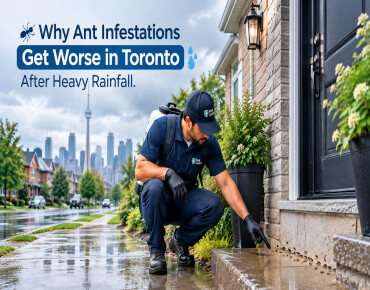
Why Ant Infestations Get Worse in Toronto After Heavy Rainfall
Heavy rain can trigger ant infestations in Toronto homes. Learn why ants enter after storms, warning signs, prevention tips, and professional ant control solutions.
Heavy rainfall often makes ant infestations worse in Toronto because water can flood underground colonies, forcing ants to leave their nests and search for dry shelter, food, and safer spaces. After storms, ants commonly enter homes and businesses through foundation cracks, basement openings, windows, and small gaps around plumbing or utility lines. If you notice more ants inside your Toronto property after a period of heavy rain, you are not alone. Seasonal rainfall, humid conditions, and moisture around buildings create ideal conditions for ants to move closer to residential and commercial spaces. Understanding why this happens can help you prevent recurring infestations and know when professional ant control is needed. Ant colonies are designed to live outdoors, usually underground or inside protected areas. However, heavy rain changes their environment dramatically. When rainfall is intense, underground nests can become flooded or too wet for the colony to survive comfortably. Worker ants then begin searching for new locations with: For many Toronto homeowners, this means ants suddenly appear inside kitchens, basements, bathrooms, garages, and wall cavities. A common misconception is that rain creates more ants. In reality, rain often pushes existing ant colonies closer to buildings, making their activity more noticeable. Toronto experiences a wide range of weather conditions throughout the year. Heavy spring and summer rainfall combined with warm temperatures creates a perfect environment for increased ant activity. Several local factors contribute to rain-related ant infestations: After heavy rainfall, soil around foundations becomes saturated with moisture. Many ant species build nests near: When these areas become flooded, ants search for alternative routes, often leading them directly toward homes. Many Toronto neighbourhoods contain older houses with aging foundations, brickwork, and basement structures. Areas such as: often have homes where small cracks or gaps can develop over time. These openings may seem insignificant, but ants can enter through extremely small spaces. Professional pest control technicians often find that the infestation source is not inside the home itself. Instead, ants are entering from: Different ant species behave differently after storms. Identifying the type of ant is important because treatment methods depend on the species. Carpenter ants are one of the most concerning ant species because they are attracted to moisture-damaged wood. Unlike termites, carpenter ants do not eat wood. However, they tunnel through wood to create nesting areas. They are commonly found around: Professional Advice: If you see large black ants appearing after rainfall, especially near damp wood, do not ignore them. Carpenter ant activity may indicate an underlying moisture problem that needs attention. Pavement ants commonly build nests underneath: After heavy rain, these ants often enter homes through cracks around: They are especially common in suburban areas around Toronto where properties have larger outdoor spaces. Odorous house ants are small ants that commonly invade homes searching for food. They are attracted to: Homeowners often notice long ant trails appearing suddenly after rainfall. A few ants outside your home are not always a problem. However, repeated indoor activity usually indicates a nearby colony. Look for these warning signs: If ants continue appearing several days after rainfall, the colony is likely nearby. Many homeowners try store-bought sprays when they first notice ants. While these products may kill visible ants, they often do not solve the underlying problem. Common mistakes include: Worker ants represent only a small part of the colony. Killing visible ants does not remove: The colony may continue producing more workers. Some homeowners immediately seal every crack they find. However, if ants are already inside walls or structures, sealing entry points without proper treatment may force them to create new routes. Rain-related ant problems are often connected to moisture. Common hidden causes include: A professional inspection helps identify the actual cause. Effective ant control is not only about removing visible insects. The goal is to locate and eliminate the source of the infestation. A professional ant control process usually includes: Technicians inspect: Different ants require different approaches. For example: Professional treatments focus on: Simply spraying surfaces usually provides only temporary relief. Ant problems after heavy rain are common throughout Toronto and surrounding communities. North York properties often experience ant issues due to: Older residential areas with gardens and trees can provide ideal nesting locations. Scarborough homeowners commonly report ants around: Heavy rainfall can disturb outdoor colonies and push ants toward homes. Etobicoke properties with larger yards and green spaces may experience increased ant activity after storms. Common problem areas include: Apartment buildings and commercial properties face different challenges. Common issues include: Professional ant control services are also commonly needed in nearby communities, including: Rainfall affects properties differently depending on building age, landscaping, drainage, and maintenance conditions. The cost of ant control in Toronto depends on several factors. Important pricing factors include: A small pavement ant problem may require a simpler solution, while carpenter ant infestations may require a more detailed inspection because they can be connected to moisture damage. The best way to determine the correct solution is through a professional inspection. Preventing ants is easier than dealing with a large infestation. Follow these maintenance tips: Inspect: Seal small gaps before ants use them as entry routes. After storms: Avoid placing: Inside your home: At Pesterminate, we understand that Toronto properties face unique pest challenges caused by changing weather, moisture, and seasonal conditions. Our approach focuses on: We understand common pest problems across Toronto neighbourhoods and surrounding areas. We identify: Our goal is not only to remove visible ants but also to help prevent future infestations. Whether you own a home, manage a rental property, or operate a business, professional ant control helps protect your property year-round. Heavy rainfall can quickly turn a small ant problem into a larger infestation. If you are seeing ants after storms, professional help can identify the source and provide an effective solution. For reliable ant control in Toronto and surrounding areas, schedule an inspection with Pesterminate today. Learn more about our professional ant control services in Toronto and protect your property from recurring infestations. Heavy rain floods outdoor colonies, forcing ants indoors to find dry shelter, food, and protection. Yes, ant activity often increases after heavy rainfall because moisture disrupts nests and encourages ants to search for new locations. Common species include carpenter ants, pavement ants, and odorous house ants. Seal cracks, reduce moisture, improve drainage, remove food sources, and schedule professional treatment if activity continues. Carpenter ants do not eat wood but can damage wooden structures by creating nesting tunnels in damp materials. Ant control costs vary depending on infestation size, ant species, property type, and treatment requirements. You should hire a professional when ants repeatedly return, DIY methods fail, or you notice carpenter ant activity inside your property.
Why Do Ant Infestations Increase After Heavy Rain in Toronto?
Why Toronto Weather Creates Ideal Conditions for Ant Problems
1. Moist Soil Around Home Foundations
2. Older Toronto Homes Have More Entry Points
Common Types of Ants Found in Toronto After Rainfall
Carpenter Ants in Toronto Homes
Pavement Ants Around Foundations
Odorous House Ants Inside Kitchens
Signs You Have an Ant Infestation After Rain in Toronto
Indoor Signs
Outdoor Signs
Why DIY Ant Treatments Often Fail
Spraying Only Visible Ants
Blocking Entry Points Too Early
Ignoring Moisture Problems
How Professional Ant Control Works in Toronto
Step 1: Complete Property Inspection
Step 2: Identify the Ant Species
Step 3: Apply Targeted Treatment
Ant Infestation Problems Across Toronto and Nearby Areas
North York
Scarborough
Etobicoke
Downtown Toronto
Nearby Areas We Serve
How Much Does Ant Control Cost in Toronto?
How to Prevent Ant Infestations After Heavy Rain in Toronto
1. Seal Cracks Around Your Property
2. Improve Drainage Around Your Home
3. Reduce Outdoor Nesting Areas
4. Keep Food Sources Controlled
Why Choose Us for Ant Control in Toronto
Local Knowledge
Professional Inspection
Long-Term Solutions
Protect Your Toronto Property From Ant Infestations After Rain
Local FAQs
Why do ants come inside after heavy rain in Toronto?
Are ant infestations common after rainfall in Toronto?
What type of ants appear after rain in Toronto homes?
How can I stop ants from entering my Toronto home after storms?
Are carpenter ants dangerous for Toronto homes?
How much does ant control cost in Toronto?
When should I hire an ant control professional in Toronto?